Your Studio Shoot Day Run Sheet: How to Plan a Half Day or Full Day Hire in Sydney
September 6, 2026
Booking the studio is the easy part. What separates a shoot that finishes calmly with the images in the bag from one that runs twenty minutes over and misses two looks is not talent or gear. It is the run sheet.
At Desk and Studio, we have watched hundreds of shoots come through the space, and the pattern is remarkably consistent. The photographers who leave happy are the ones who decided in advance what happens in each hour. So here is the run sheet we would hand you if you asked us how to plan a half day or full day studio hire in Sydney.
Start with the maths, not the mood board
Before you write a single time on a page, work backwards from what you actually have to deliver.
A half day with us is four hours and a full day is eight. That sounds like a lot until you subtract load in, set up, talent prep, breaks and pack down. A realistic rule of thumb is that you will spend around a quarter of your booking on logistics and the rest on shooting.
So a four hour half day usually gives you about three hours on the floor. If your shot list has six looks in it, that is roughly thirty minutes per look including changes. Write that number down. If it feels tight, cut a look rather than hoping you will move faster on the day. You will not.
The half day run sheet (4 hours)
This is the shape of a well run half day. Adjust the clock to your start time.
- First 20 minutes: load in and orient. Get everything through the door and into one corner rather than spread across the floor. Find the power, the change area and the kitchenette. Put your bag somewhere it will not be stepped on for the next four hours.
- 20 to 45 minutes: build your first set up. Backdrop first, then key light, then fill and rim. Test on a stand in or on yourself. Nail your exposure and white balance now so you are not chasing it later.
- 45 minutes to 1 hour: talent arrives and gets ready. Call your talent for after the set up, not at the start. Nobody enjoys sitting in a corner watching a light stand go up. Use the green room and let hair and makeup work while you finish.
- 1 hour to 2 hours 45: shoot. This is your real working block. Shoot the hero image first, while everyone is fresh and the clock is not a factor. Tick each look off the list out loud so the room knows where it is up to.
- 2 hours 45 to 3 hours 15: the flexible block. Either the shot you did not plan, the reshoot of the one that did not land, or the extra angles a client will ask for later. Protect this block. It is the one that saves you.
- 3 hours 15 to 3 hours 45: pack down. Backdrops rolled, lights down, gear back in cases, floor clear.
- Last 15 minutes: final sweep and out. Check the change area, the kitchenette and behind the backdrops. Something is always left behind.
The full day run sheet (8 hours)
A full day is not two half days back to back. It has a rhythm of its own, and the middle is where it lives or dies.
- Hour 1: load in and build. Same as above, but with more room to be thorough. Build two set ups if you know you will need both, so the switch later takes minutes instead of half an hour.
- Hour 2: first shooting block. Energy is highest here. Shoot the images the whole job depends on.
- Hour 3: second look, second set up. Keep the momentum going while everyone is still sharp.
- Hour 4: break. Take it properly. A real thirty minute stop makes the back half of the day faster, not slower. There is a kitchenette on site, so a coffee and a sit down does not mean leaving the building.
- Hours 5 and 6: the working middle. This is where volume gets done. Detail shots, alternate angles, the variations a client will thank you for.
- Hour 7: the flexible block and the wildcard. Anything experimental goes here. If the list is finished, this is where the best frames of the day often turn up.
- Hour 8: pack down and sweep. Do not let this creep. Set an alarm.
Seven things that quietly eat your booking
- Arriving without a shot list. Deciding what to shoot while the clock runs is the single most expensive habit in studio work.
- Calling talent too early. Bored talent goes flat. Call them for when you actually need them.
- One giant set up change mid shoot. If two looks need completely different lighting, group them so you change once, not three times.
- Forgetting wardrobe prep. Creased garments cost you real minutes. There is a steamer, clothing racks and makeup desks in the green room, so use them before you start rather than between frames.
- No stand in. Dialling exposure on your actual talent burns their energy and your time. Use anyone else in the room.
- Not checking files as you go. A quick tether or card check after the first look beats discovering a focus problem at midnight.
- Leaving pack down until the end. Roll a backdrop the moment you finish with it. The last thirty minutes should be tidying, not dismantling.
What we include, so you do not have to plan around it
One of the reasons a run sheet works here is that you are not building a studio from scratch. Every booking includes the lighting and the backdrops, so the gear is already in the room and ready.
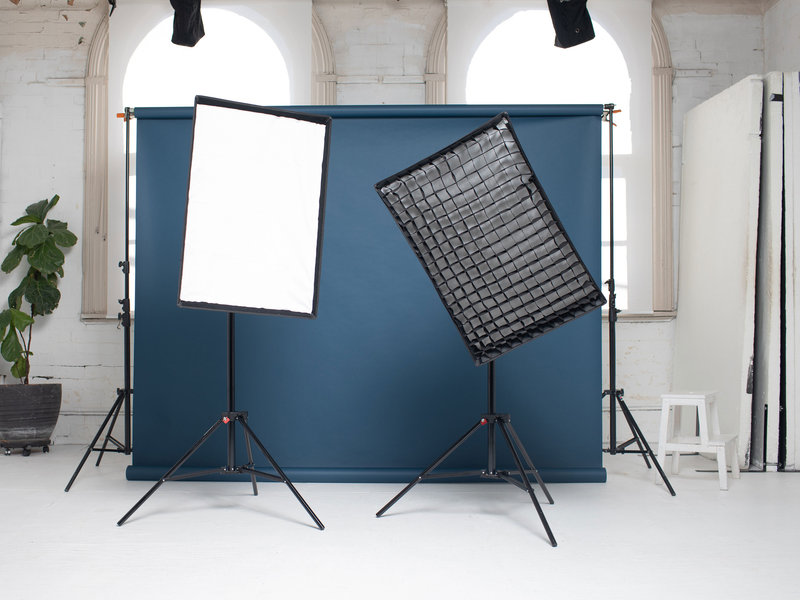
You have a 5.7m by 9m shooting floor with 4.6m ceilings, two large arch windows with blockout blinds, white brick and timber floors, Godox strobes with a full modifier kit, continuous LEDs, C-stands, a boom and sandbags, and paper rolls in white, black, grey and beige, with chroma green available on request. There is a change area, a green room with clothing racks, makeup desks and a steamer, and a kitchenette.
Half day hire is $380 and a full day is $620, with a weeknight two hour session at $280 and additional hours at $110 per hour, all including GST. If you would like the numbers broken down further, our post on how much it costs to hire a photography studio in Sydney goes through it properly, and how to hire a photography studio for a day covers the booking side.
Frequently Asked Questions
How long should I book the studio for?
As a guide, allow around thirty minutes per look plus an hour for set up and pack down. One to three looks fits comfortably in a half day. Four or more, or anything with multiple lighting set ups, is a full day.
Can I add hours if the shoot runs over?
Additional hours are $110 including GST, subject to availability on the day. It is always worth mentioning at booking if you think you might run long, so we can hold the time for you.
When should my talent arrive?
Ideally after your first lighting set up is built and tested. That usually means forty five minutes to an hour into your booking for a half day, and about an hour for a full day.
Do I need to bring lighting or backdrops?
No. Lighting and backdrops are included in every studio booking. Bring your camera, your cards, your styling and your shot list.
What if I need to change my booking?
You can move your date free of charge with more than 72 hours notice, and a $25 fee applies inside that window. Cancellations are fully refunded with more than 72 hours notice and refunded at 50 per cent inside it.
Is there somewhere for hair, makeup and wardrobe?
Yes. The green room has makeup desks, clothing racks and a steamer, plus a change area, so talent can get ready while you work on the floor.
Plan it once, shoot it calmly
A good run sheet is not about being rigid. It is about deciding the boring things in advance so that on the day you can spend your attention on the picture in front of you rather than the clock behind you. Write it, share it with everyone coming, and let the room do the rest.
When you are ready to lock in your half day or full day, book now or get in touch and tell us what you are shooting. We are always happy to talk through the timing with you before you commit. Ready to take a tour?
More Articles
- Your Studio Shoot Day Run Sheet: How to Plan a Half Day or Full Day Hire in Sydney
- Natural Light Studio Hire in Sydney: How to Make the Most of a Daylight Studio
- How Much Does a Hot Desk Cost in Sydney? Day, Week and Month Rates
- Hiring a Studio for Dance, Movement and Performer Portraits in Sydney
- Photography Space for Rent in Sydney: What You Actually Get
- Hiring a Studio for a Beauty, Hair or Makeup Portfolio Shoot in Sydney
- Hiring a Studio for Family and Kids Photography in Sydney
- Hiring a Studio for a Fashion or Editorial Shoot in Sydney
- What to Expect Inside a Sydney Photography Studio
- Hiring a Studio for Headshots: How to Run a Smooth Headshot Day in Sydney
- How to Hire a Photography Studio for a Day in Sydney
- Affordable Photography Studio Hire in Sydney: How to Shoot on a Budget
- Renting Your Own Photography Studio vs Hiring by the Hour in Sydney
- How to Hire a Studio to Run Your Own Photography Workshop or Class in Sydney
- Product Photography in a Hired Studio: How to Plan, Light and Shoot Like a Pro
- Choosing Studio Lighting to Rent: A Photographer's Guide to Lights, Modifiers and Backdrops
- Your First Studio Photography Shoot: A Beginner's Guide
- Photography Studio Rental in Sydney
- Photography Workshops in Sydney and How to Choose One
- How to Find a Photo Studio Near You in Sydney
- Photo Studio Hire in Sydney's Inner West
- How to Choose the Right Photoshoot Space in Sydney
- Self-Shoot Studios: How to Take Your Own Photos in a Hired Space
- How to Hire a Studio for a Boudoir or Portrait Shoot
- How to Hire a Photography Studio in Sydney: The Complete Guide
- How Much Does It Cost to Hire a Photography Studio in Sydney?
- Hot Desk & Creative Coworking in Sydney's Inner West
- Hiring a Video Studio in Sydney: Green Screen, Lighting and Sound
- Dry Hire Explained: Renting Studio Lighting & Backdrops in Sydney
- Planning a Content or Personal Branding Shoot in a Sydney Studio
- Click, Learn, Repeat: A Photographer’s Growth Guide
- The Power of Versatility: Mastering Natural and Studio Light in Photography